
Heart rhythm problems can sometimes occur suddenly and may require immediate medical attention. In such situations, doctors may use a Temporary Pacemaker to stabilize the heart until a permanent solution is decided. A temporary pacemaker for heart patients is a life-saving device that helps maintain a normal heart rhythm when the heart beats too slowly or irregularly.
Cardiologists often recommend a temporary pacemaker for heart patients when the condition is expected to improve or when doctors need time to evaluate whether a permanent pacemaker is necessary. According to Dr. Rakesh Jain, early intervention with the right pacing support can prevent serious complications and help stabilize the patient quickly.
What is a Temporary Pacemaker?
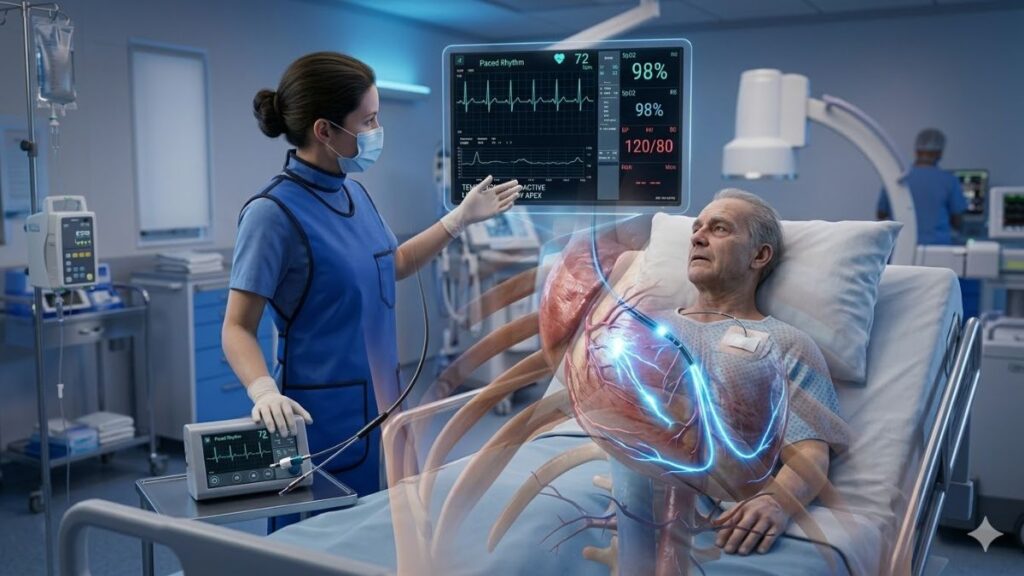
A temporary pacemaker for heart patients is a small medical device used to control abnormal heart rhythms for a short period of time. It sends electrical signals to the heart to maintain a safe and steady heartbeat.
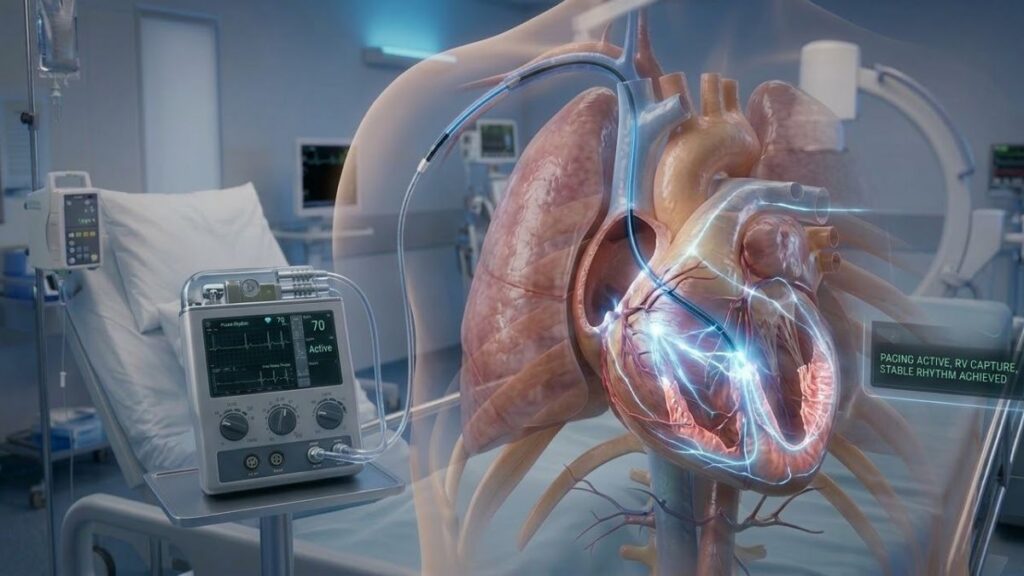
Unlike a permanent pacemaker, which is implanted under the skin for long-term use, a temporary pacemaker is used only for a limited duration. It is usually connected to the heart through a thin wire (lead) inserted through a vein and attached to an external pacing machine.
Doctors commonly use a temporary pacemaker for heart patients in emergency situations or after certain heart procedures when the heart’s natural electrical system is temporarily weakened.
Why Is a Temporary Pacemaker Implanted?
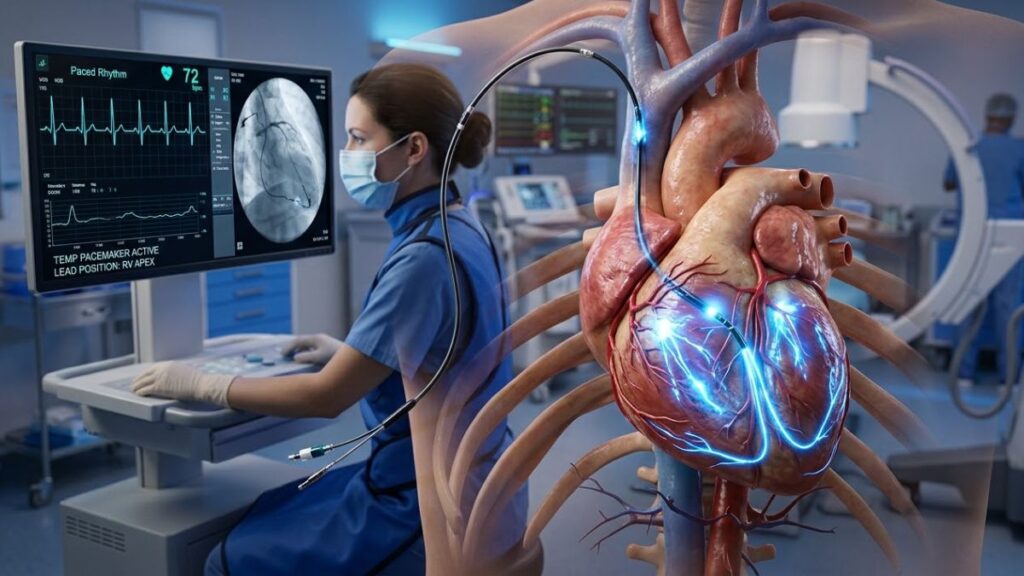
There are several medical situations in which doctors may recommend a temporary pacemaker for heart patients. The main reason is to support the heart when it cannot maintain an adequate rhythm on its own.
Some common reasons include:
- Severe slow heart rate (bradycardia)
- Heart block or interruption in electrical signals
- After a heart attack when the rhythm becomes unstable
- During or after certain heart surgeries
- Drug-related rhythm disturbances
- As a bridge before implanting a permanent pacemaker
In many cases, a temporary pacemaker for heart patients is used as a short-term safety measure until the heart recovers or doctors decide on further treatment.
What Is the Purpose of a Temporary Pacemaker?
The primary purpose of a temporary pacemaker for heart patients is to maintain a stable heart rhythm and ensure proper blood circulation throughout the body.
When the heart beats too slowly, vital organs such as the brain may not receive enough oxygen-rich blood. This can lead to symptoms like dizziness, fainting, fatigue, or even life-threatening complications.
By delivering controlled electrical impulses, the device helps:
- Maintain a safe heart rate
- Prevent fainting episodes
- Support the heart during recovery
- Stabilize patients in critical care settings
Cardiology experts such as Dr. Rakesh Jain emphasize that timely use of pacing support can significantly improve patient outcomes during emergencies.
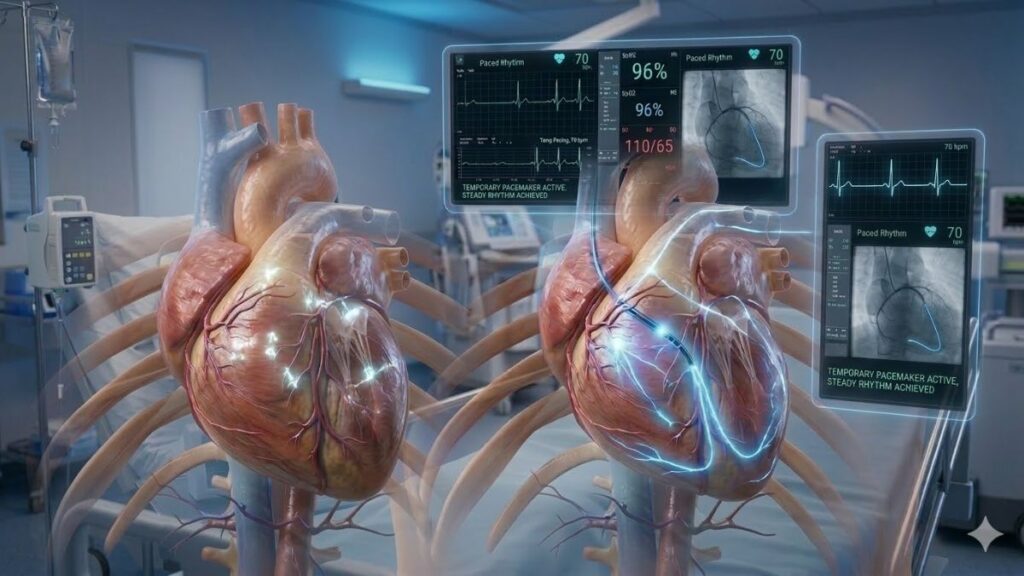
How Does a Temporary Pacemaker Work?
A temporary pacemaker for heart patients works by sending mild electrical signals to stimulate the heart muscle and regulate the heartbeat.
The system usually includes three main components:
- Pacing Lead (Wire): A thin flexible wire inserted through a vein and guided into the heart.
- External Pulse Generator: A small machine placed outside the body that produces electrical impulses.
- Monitoring System: Doctors monitor the heart rhythm continuously to adjust pacing settings if required.
When the heart rate falls below a safe level, the device automatically delivers electrical impulses that trigger the heart to beat at a normal pace. This controlled stimulation ensures that blood continues to circulate efficiently throughout the body.
How Long Can a Temporary Pacemaker Be Used?
A temporary pacemaker for heart patients is generally used for a short period, depending on the patient’s medical condition. In most cases, it may be required for a few hours to several days.
However, in certain situations it can be used for a longer duration under close medical supervision. Doctors regularly monitor the patient’s heart rhythm to determine whether the device is still needed or if a permanent pacemaker should be considered.
Once the heart’s natural rhythm stabilizes or a long-term treatment plan is decided, the temporary device is safely removed.
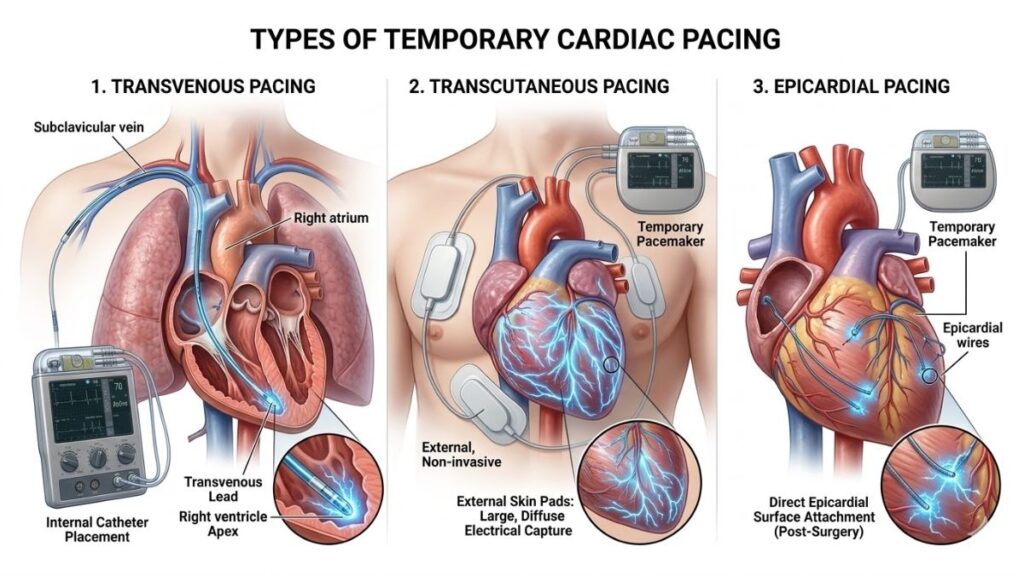
How Many Types of Temporary Pacemakers Are There?
There are mainly three types of temporary pacemaker for heart patients, and doctors choose the most suitable option depending on the patient’s condition.
1. Transvenous Temporary Pacemaker
This is the most commonly used type. A pacing wire is inserted through a vein and positioned inside the heart to control the rhythm.
2. Transcutaneous Pacemaker
In this method, pacing pads are placed on the chest and electrical impulses are delivered through the skin. It is often used in emergency situations.
3. Epicardial Temporary Pacemaker
This type is commonly used after heart surgery, where pacing wires are attached directly to the outer surface of the heart.
Each method is selected carefully based on the patient’s health condition and treatment requirements.
Final Thoughts
Heart rhythm disorders can develop suddenly and may require immediate support to keep the heart functioning safely. A temporary pacemaker for heart patients plays a crucial role in stabilizing heart rhythm during emergencies or recovery periods.
By providing controlled electrical stimulation, this device helps maintain proper blood circulation and protects vital organs from complications. Specialists like Dr. Rakesh Jain highlight that early diagnosis and timely pacing support can make a significant difference in patient recovery.
If someone experiences symptoms such as unexplained fainting, severe dizziness, or a very slow heartbeat, it is important to seek medical evaluation promptly. With proper care and advanced cardiac treatments, many rhythm disorders can be managed effectively and safely.