
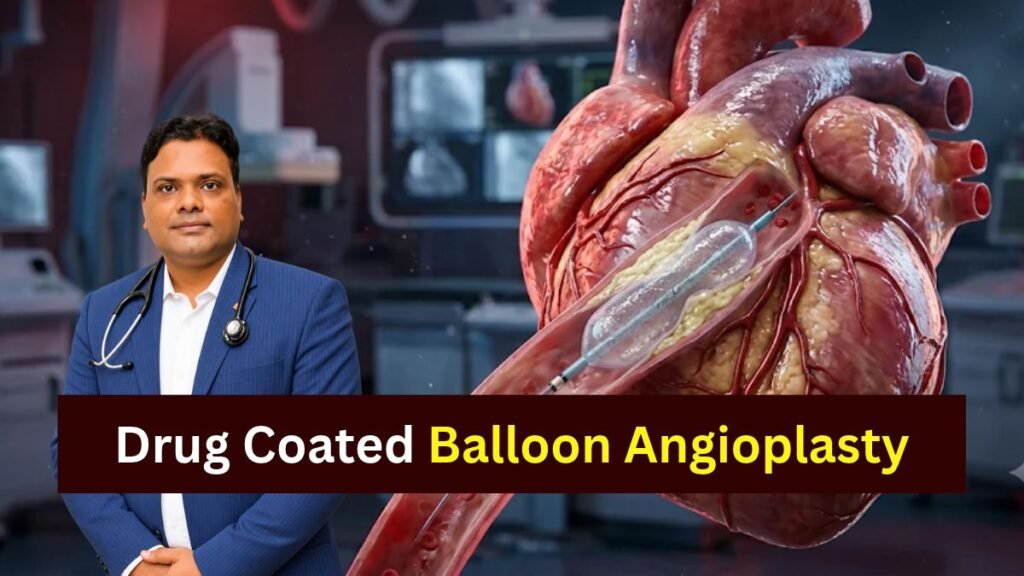
Drug-Coated Balloon Angioplasty: Benefits, Risks, Cost & Everything You Should Know
Heart disease is becoming increasingly common, and blocked arteries are one of the major reasons behind heart-related problems. When the arteries supplying blood to the heart become narrow due to plaque buildup, the heart may not receive enough oxygen-rich blood. This can lead to chest pain, breathlessness, and even a heart attack.
Angioplasty is a commonly used treatment to open narrowed or blocked arteries. However, medical technology has introduced another option called drug-coated balloon angioplasty, which may help certain patients without leaving a permanent stent inside the artery.
Understanding this treatment can help patients make informed decisions about their heart health. If you are exploring options such as DCB Angioplasty in Indore, Dr. Rakesh Jain can help you understand the available treatment approaches and their suitability.
What Is Drug-Coated Balloon Angioplasty (DCB)?
Drug-coated balloon angioplasty is a minimally invasive heart treatment used to open narrowed arteries and reduce the risk of the treated area becoming narrow again.
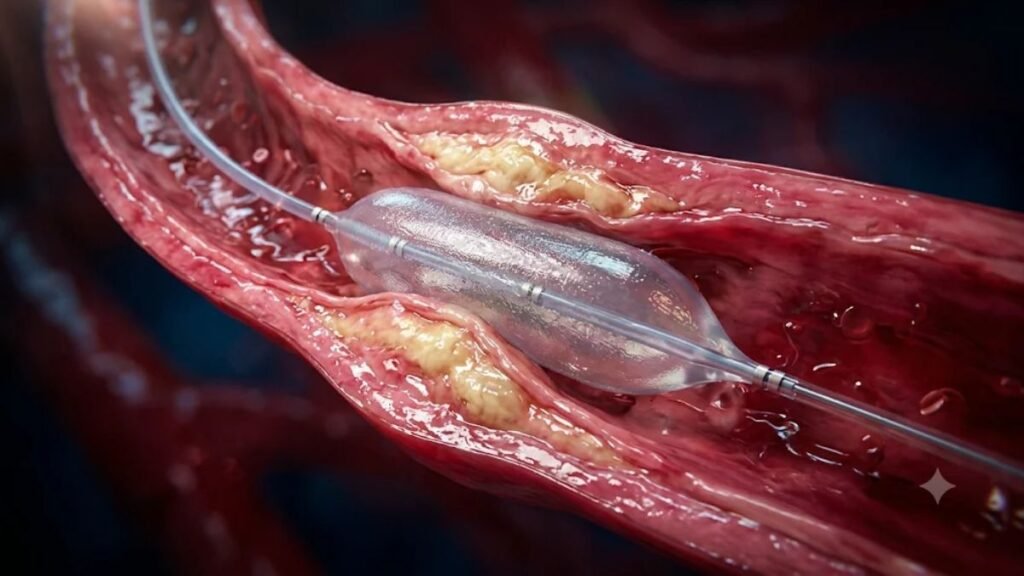
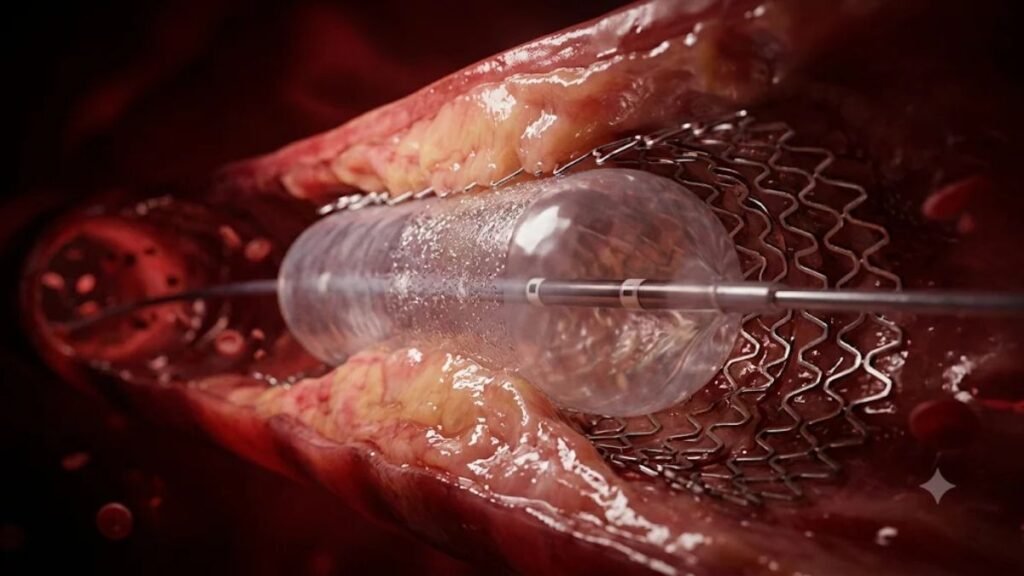
In this procedure, a special balloon is covered with a medicine that helps prevent excessive growth of cells inside the artery. When the balloon reaches the narrowed area, it is gently inflated. This opens the artery and allows the medicine to transfer to its inner walls.
Unlike traditional stent-based angioplasty, this technique does not leave a permanent metal device inside the treated area.
The main purpose of drug coated balloon angioplasty is to improve blood flow while avoiding the need for a new permanent implant in suitable cases.
What Does a Drug-Coated Balloon Angioplasty Procedure Involve?
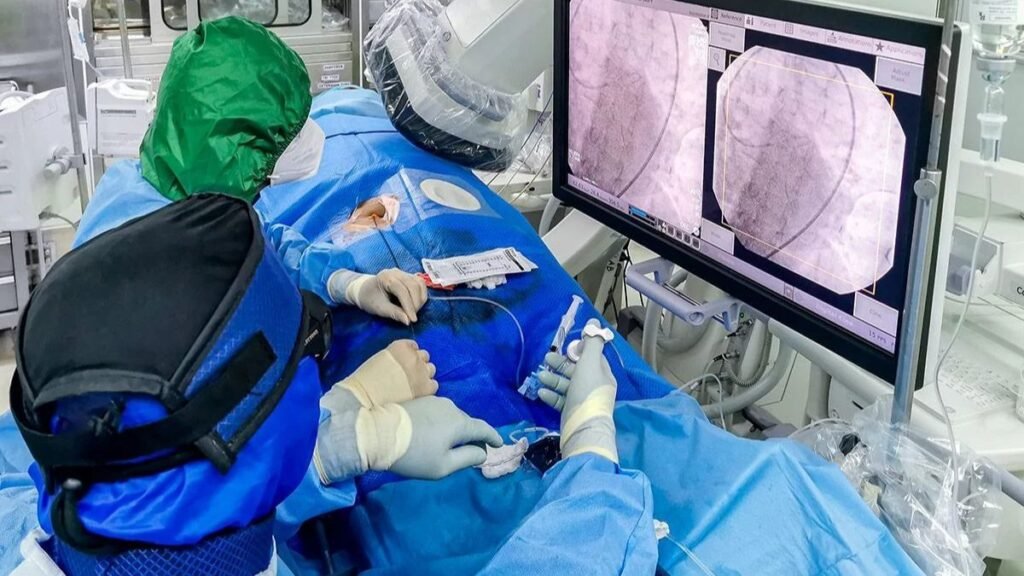
The procedure is performed in a specialised cardiac catheterisation laboratory, commonly known as a cath lab.
Here is how it generally works:
- Initial evaluation: The cardiologist examines the patient’s medical history and performs necessary tests, such as ECG, echocardiography, or coronary angiography.
- Access to the artery: A thin tube called a catheter is inserted through an artery in the wrist or groin.
- Balloon placement: A guidewire helps the doctor move the balloon catheter towards the narrowed artery.
- Opening the blockage: A balloon may first be used to prepare the narrowed area and improve blood flow.
- Medicine delivery: The drug-coated balloon is inflated for a short period, allowing the medicine to transfer to the artery wall.
- Completion: The balloon and catheter are removed, and the doctor checks whether blood is flowing properly.
The procedure usually takes around 30–90 minutes, depending on the complexity of the blockage. The actual duration may vary from patient to patient.
For people considering DCB Angioplasty in Indore, Dr. Rakesh Jain can explain the procedure and whether this treatment is appropriate for their condition.
What Are the Benefits of Drug-Coated Balloon Angioplasty?
This treatment offers several potential advantages for carefully selected patients.
- No permanent metal implant: It can treat certain blockages without leaving a new stent behind.
- Reduced risk of tissue growth: The medicine helps control excessive tissue growth inside the treated artery.
- Preserves natural artery movement: Since no permanent metal structure is required, the artery retains more of its natural structure.
- Useful for in-stent restenosis: It can be an option when an artery becomes narrow again inside a previously placed stent.
- Less permanent material: It avoids adding another layer of metal inside an artery that already contains a stent.
However, the results depend on the patient’s condition, the location of the blockage, and the quality of the procedure.
Which Type of Angioplasty Is the Best?
There is no single angioplasty technique that is best for every patient. The right treatment depends on the location, length, and severity of the blockage, along with the patient’s overall health.
The commonly used approaches include:
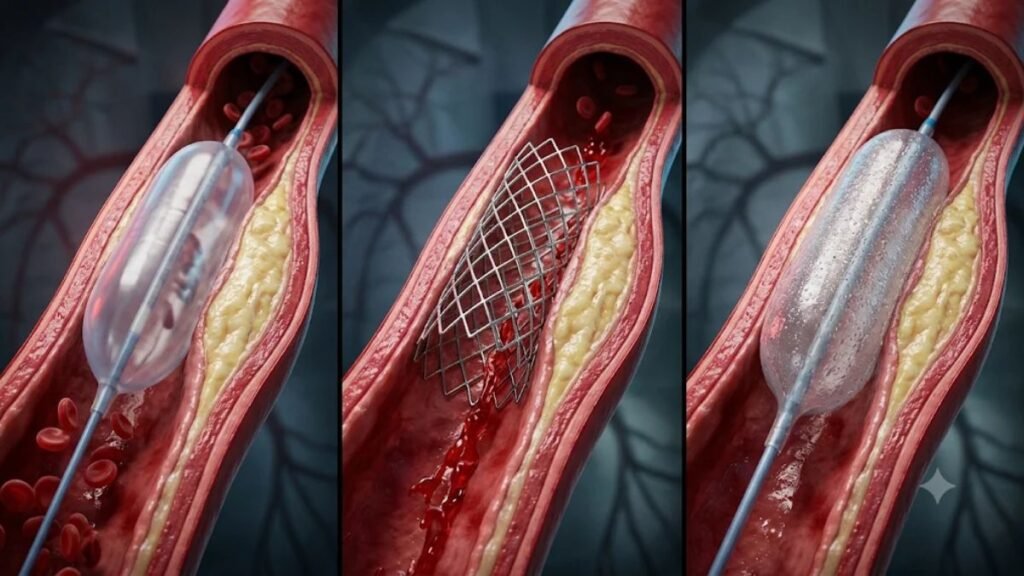
- Conventional balloon angioplasty: A balloon is used to widen the narrowed artery.
- Drug-eluting stent angioplasty: A metal stent releases medicine to reduce the chances of the artery becoming narrow again.
- Drug-coated balloon angioplasty: A medicine-coated balloon delivers medication to the artery wall without necessarily leaving a permanent implant.
Your cardiologist will recommend the most appropriate option after examining your angiography findings and medical history.
How Long Does a Drug-Coated Balloon Last?
A drug-coated balloon is a temporary medical device. It is inserted into the artery, inflated to deliver medicine, and then removed.
Therefore, it does not remain inside the body like a stent.
The medicine transferred to the artery wall works over time to reduce excessive cell growth and the possibility of re-narrowing. The long-term results depend on several factors, including the patient’s health, artery condition, and lifestyle habits.
Regular follow-ups and prescribed medicines remain important after treatment.
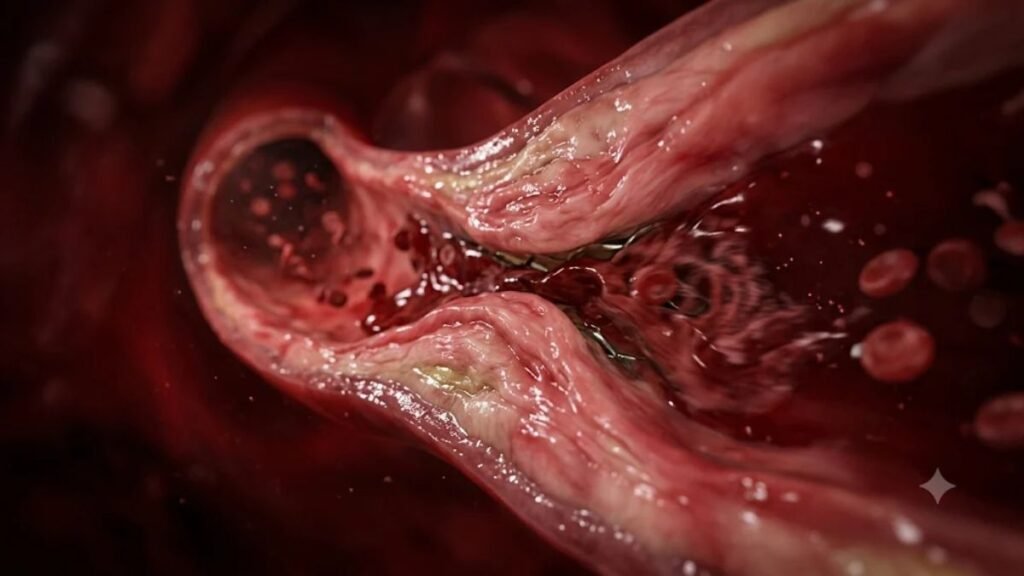
What Are the Disadvantages of Drug-Coated Balloon Angioplasty?
Although this treatment has several benefits, it also has certain limitations.
- It may not be suitable for every type of coronary blockage.
- Some complex or heavily calcified blockages may require additional treatment.
- The artery may become narrow again in some patients.
- Proper preparation of the blocked area is important for successful results.
- It may not provide enough support if the artery needs a permanent scaffold.
- The procedure still carries risks such as bleeding, blood vessel injury, and blood clot formation.
A detailed cardiac evaluation helps determine whether this treatment is a safe and suitable choice.
Can DCB Angioplasty Be Performed If a Previous Stent Procedure Fails?
Yes. Drug-coated balloon treatment can be considered in certain patients whose artery becomes narrow again after an earlier stent procedure. This condition is called in-stent restenosis.
The drug-coated balloon delivers medicine to the affected area and helps reduce the growth of tissue responsible for narrowing the artery.
However, it is not suitable in every case. The cardiologist must first identify the reason for the previous stent failure and evaluate the condition of the artery.
For patients seeking DCB Angioplasty in Indore, Dr. Rakesh Jain can assess the available treatment options based on their cardiac condition.
How Much Does Drug-Coated Balloon Angioplasty Cost?
The cost of drug-coated balloon treatment varies depending on several factors, such as:
- The hospital and cath lab facilities.
- The number of balloons required.
- The complexity and location of the blockage.
- Additional medicines, investigations, and hospital stay.
- The patient’s overall medical condition.
There is no fixed cost for every patient. It is best to consult the hospital for an accurate estimate after reviewing the angiography report.
Conclusion
Drug-coated balloon treatment is an important advancement in modern interventional cardiology. It offers a suitable alternative for selected patients who may benefit from opening a narrowed artery without placing another permanent stent.
However, every patient’s heart condition is different. Choosing the right treatment requires proper diagnosis, careful evaluation, and expert medical guidance.
If you are looking for DCB Angioplasty in Indore, Dr. Rakesh Jain can guide you about available treatment options and help you understand which approach may be appropriate for your heart health.